
Living an Interruptible Life without the Anxiety
How to master your time when your time is not your own

Friends, thank you for subscribing to The Deep End!
I want my writing to serve you, but to do that it needs to land in your inbox around the time you actually have time to read it.
Will you do me a 30 second favor and take this ONE QUESTION survey?
Thanks! Now back to what you came here for :)

My baby wails.
My boss calls.
My toddler pleads for food.
My parishioner needs me at the hospital now.
My body doesn’t cooperate with my calendar.
My friend just had a messy break up and could use a phone call.
Interruptions abound in my life. They yank me neck first from the methodical ministry I’m engaged in and plunge me headlong into someone else’s moment, pain, anxiety, crisis, project or emotional morass. They strip away the comfortable illusion that I am in control of my life, my time, my productivity.
I could be wrong, but I’m guessing your life isn’t too different.
In his short story, Leaf by Niggle, J.R.R. Tolkien describes an amateur artist beset by interruptions. Niggle loves to paint. A spell has been cast over his imagination by a particular tree that he can’t seem to fully capture. The fact that he has to go on his “final journey” sometime soon looms like a dark cloud of anxiety over his work. He needs to finish his tree.
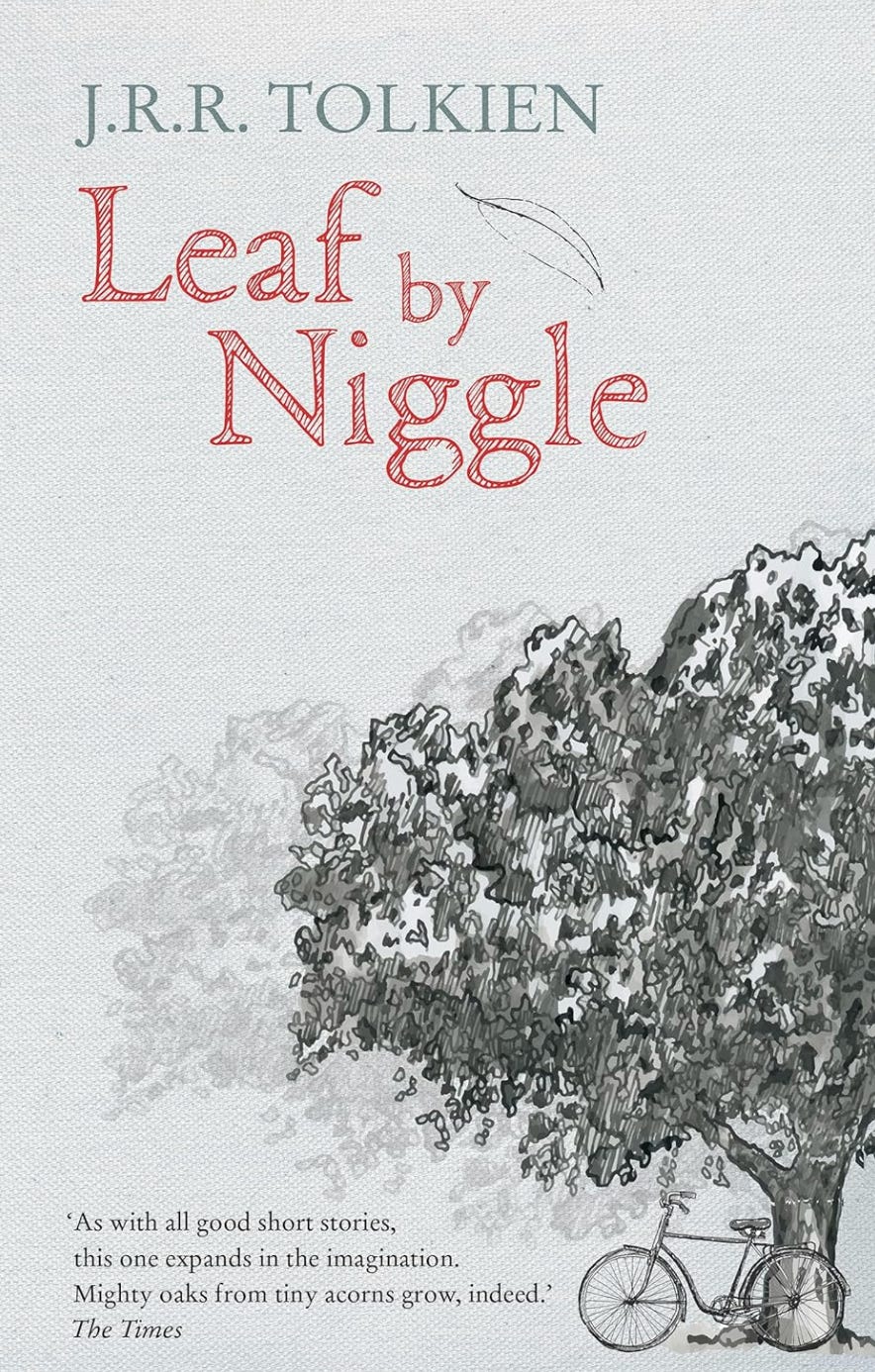
But his neighbor, Mr. Parish, constantly barges into Niggle’s painting shed requesting his services patching his roof or fetching the doctor (Mr. Parish can’t do much for himself). Niggle, being a dutiful if resentful neighbor, helps however he can. Having biked in the rain to get the doctor for Parish’s wife, he gets sick and can’t paint for a while. Delay after delay.
Friendship, accident and responsibilities present daily impediments to “his life’s work.” Each hindrance heightens his anxiety. Will he finish his tree before the Driver comes to pick him up for his journey?
He won’t. He doesn’t.
Every little interruption in life is a prophet, declaring to us that The Great Interruption is on its way. The Driver of death is coming to take us on our journey. He will come when we least expect it, timelines and gantt charts be damned.
During my chapter with lymphoma, I came face to face with the Driver and with the possibility he would pick me up before I finished…well…anything.
Meeting or raising my child.
Pastoring my church.
Writing what I felt God had called me to write.
If I hadn’t finished, had I really lived?
On the days when I’m less centered on my hope in Jesus, I wonder, “What if the cancer comes back? What have I really done in the last few years? What if I don’t complete the work I’ve been given?”
Perhaps I need a dose of Niggle’s treatment.
The first stop on Niggle’s final journey is the Workhouse Infirmary.
Tolkien, being a dedicated Catholic, paints the picture of a dreary place of refinement, healing and spiritual growth through toil. But whether you believe in purgatory in the hereafter or not, you can imagine a man wracked with insecurity, interruptions and anxiety being slowly healed and calmed through simple, scheduled labor.
After many years…
“…it could not be denied that he began to have a feeling of — well, satisfaction: bread rather than jam. He could take up a task the moment one bell rang, and lay it aside promptly the moment the next one went, all tidy and ready to be continued at the right time. He got through quite a lot in a day, now; he finished small things off neatly. He had no ‘time of his own’ (except alone in his bed-cell), and yet he was becoming master of his time; he began to know just what he could do with it. There was no sense of rush. He was quieter inside now, and at resting-time he could really rest.”
- Tales from the Perilous Realm, Leaf by Niggle, 297.
Some of us experience a type of purgatory on earth.
Ronald Rolheiser, in his little book Domestic Monastery, likens the uninvited interruptions and quotidian demands of domestic life to the bells of the monastery.
In a monastery, a monk’s time is not his own.
A bell rings, and he wakes up for prayer.
A bell rings, and he stops praying and heads to the breakfast hall.
A bell rings, he tidies his plate, and walks into the field for his daily labor.
A bell rings, he puts his shovel down, and goes to the chapel for prayer. And so it goes.
But, Rolheiser says, I don’t have to be a monk to listen for the bells.
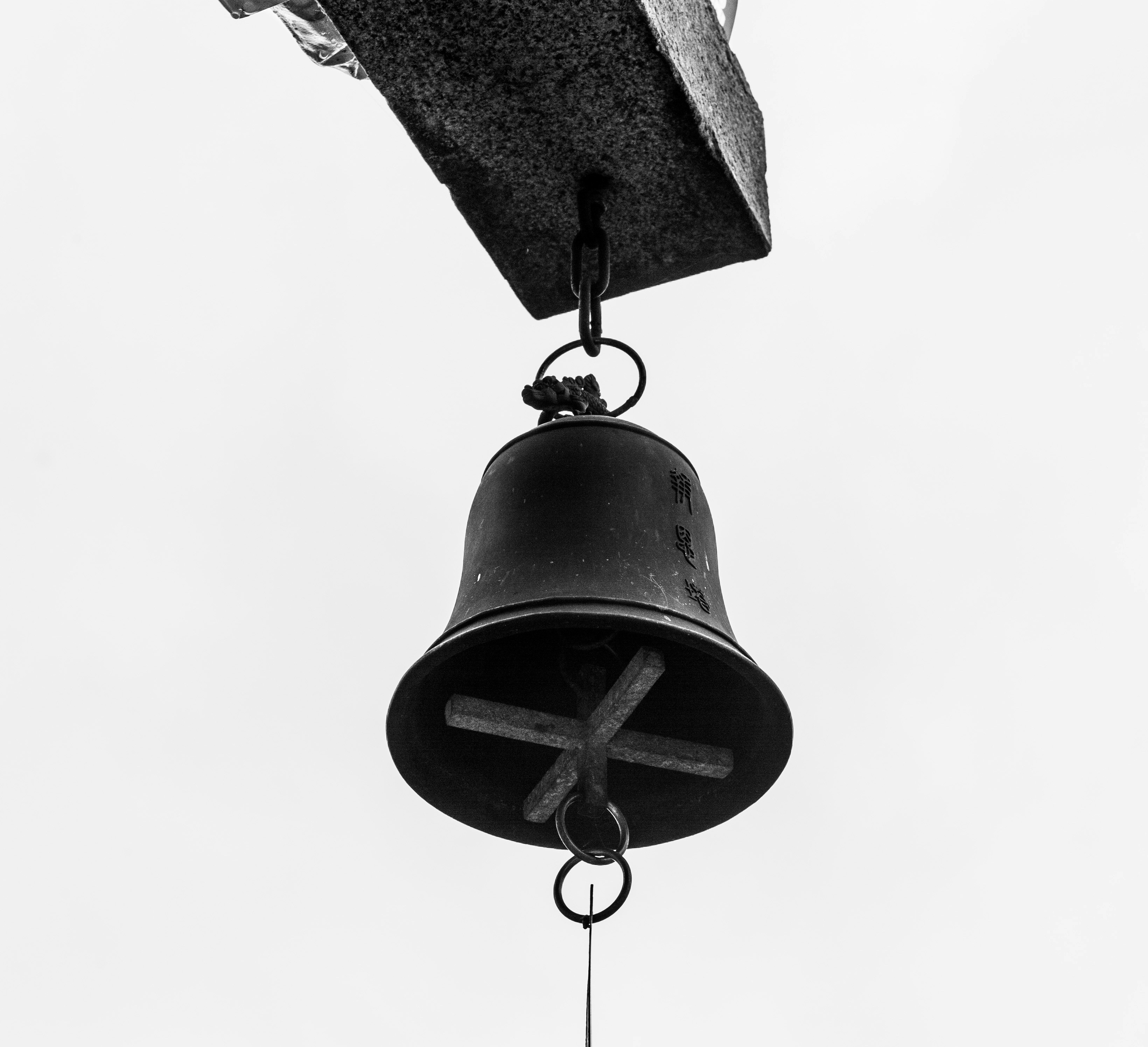
My baby cries. Ding!
My stomach rumbles. Ding!
My parishioner has an urgent need. Ding!
My alarm for daily prayer goes off. Ohhhh ohhh we’re halfway there! Ohhhh ohhh! Livin’ on a prayer! (You have to get creative with your bells sometimes.)
My teammate needs something from me, “like yesterday.” Ding!
Receiving “hindrances” and surprises as bells calling us forward into the next moment of love and stewardship can fundamentally transform our relationship to our work, schedules, friends, and family.
Don’t get me wrong. In our digitally distracted world, I’m all for minimizing the buzzing in my pocket. I make liberal use of Focus mode, and have boundaries that govern how I will ordinarily spend parts of my day.
But in my backlash against the tyranny of the attention economy, I need to be careful not to view miniature callings to love as if they’re harbingers of death. In fact, in God’s interior debate about Niggle, he notes that he received many small “calls” on a weekly basis, but Niggle called them “interruptions.”
Through his anxiety about his “life’s work”, he couldn’t see that love was beckoning him to a different kind of painting. A painting whose tools are not brushes and oil, but compassionate responsiveness. A painting that doesn’t sit static on a canvas, but lives dynamically in the flourishing of his neighbors. A painting that can never be “finished” per se, but what work of eternal value ever can?
That painting—together with what we typically call our “vocation”—is our life’s work. The interruptions aren’t more or less entertaining side missions, they are the mission.
As a Christian I believe that the Great Interruption of death has itself been conquered and transformed into a journey toward a greater life. And that means that every junior interruption in life has been transformed too.
There’s no sense of rush.
We can be quieter inside now. And at resting time, we can really rest.

Thanks for that powerful reminder! How quickly I forgot that each day is a gift, each challenge or interruption is an opportunity. May God give us eyes to see His goodness in the mundane of every day!
Perfect timing :). Thank you!